

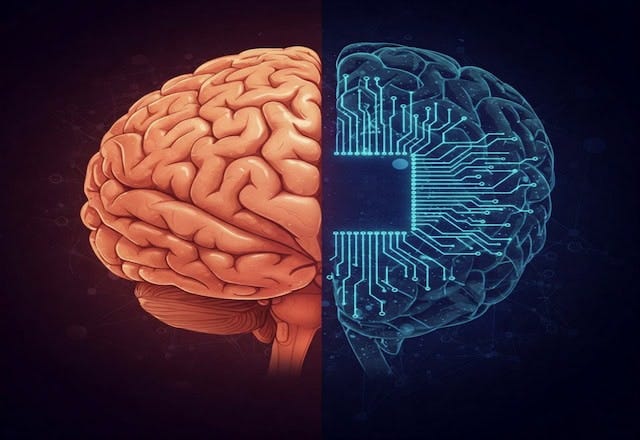
We do not become more human through perfect responses, but through imperfect moments met with presence.
What happens to us when we become accustomed to relationships that never require patience, compromise, or emotional courage? Artificial intelligence is always there. It responds instantly. It does not interrupt us, misunderstand us, arrive late, need a break, or carry its own bad day into the conversation. It can offer ideas, encouragement, explanations, and even something that feels like empathy—on demand, at any hour, with no apparent cost beyond opening a screen. That convenience is remarkable. It can help us write, learn, create, organize, and think. But there is also a quieter question worth asking: What might happen when we begin to expect human beings to be as frictionless as the technology we use?
Real people are not frictionless. They are complicated. They are occasionally distracted, tired, defensive, uncertain, emotional, and hard to read. They may not respond right away. They may say the wrong thing. They may disappoint us. We may disappoint them. Relationships require us to clarify, forgive, wait, listen, apologize, and sometimes sit in uncomfortable silence without knowing how to fix it. And yet, that friction is not a flaw in human connection. It is the very place where our humanity lives.
The most meaningful relationships in our lives are rarely built on perfect exchanges. They are built in the imperfect moments: the conversation that takes longer than expected, the disagreement that reveals an important truth, the vulnerable admission that changes the tone of a relationship, the friend who sees us at our worst and chooses to stay. Human connection becomes real not because it is effortless, but because it asks something of us.
AI can simulate closeness, but it cannot fully replicate a mutual relationship. It can reflect our words back to us with care and coherence. It can respond in a reassuring tone. It can even help us feel understood. But it does not need us in the way another human being does. It does not risk rejection when it speaks honestly. It does not feel the consequence of disappointment. It does not bring its own hopes, wounds, history, or unspoken needs into the room.
That may make AI easier. It does not make it more human.
The danger is not that AI becomes useful. The danger is that we become less willing to do the work of relationship because the alternative feels so much smoother. If we grow accustomed to immediate answers, we may lose tolerance for the pauses required in genuine conversation. If we become used to interactions tailored entirely around our preferences, we may become impatient with people who challenge our assumptions. If we seek companionship without vulnerability, we may begin to confuse emotional comfort with emotional intimacy. But intimacy has a cost. It requires us to be known.
To be known means allowing someone else to see the parts of us we would rather polish, hide, or explain away. It means accepting that another person may not always respond perfectly. It means risking misunderstanding to be understood more deeply. It means giving others the same grace we hope they will give us.
This is not an argument against using AI. It is an argument for using it wisely. Let AI help us become more capable, more creative, and perhaps even more thoughtful. But let it never become a substitute for the unpredictable, inconvenient, and sacred work of being present with other people.
Call the friend instead of only sending the message. Stay in the difficult conversation a little longer. Listen without immediately solving. Let someone disappoint you without deciding they are no longer worth knowing. Allow yourself to be imperfect in front of someone who matters.
The future will likely offer us increasingly polished forms of artificial connection. That makes our choice even more important.
When human connection becomes too slow, too messy, or too demanding compared with a screen, will we remember that its imperfections are not the problem—but the point?
This is as good a summary of AI's marginal benefits as I've read. There's a parallel here with physical hugs as opposed to Zoom time or emojis. Here's hoping those virtual 'benefits' stay in their appropriate place with us. Thanks for another thought-provoking essay.
Indeed, the most meaningful relationships are also often the most imperfect. They require a different kind of AI… attention and intention. Excellent article, Dennis!