

The moment you doubt whether you can fly, you cease forever to be able to do it.
―J.M. Barrie, Peter Pan
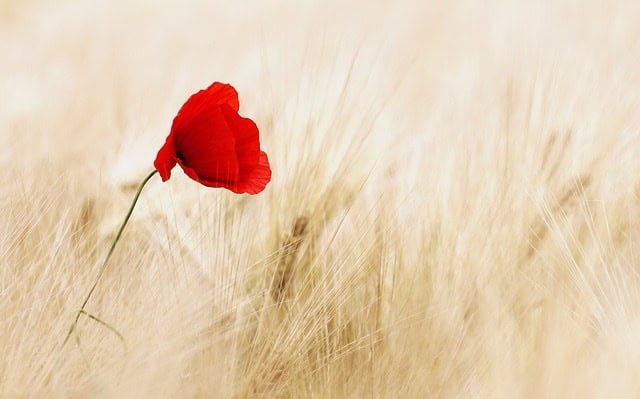
Remember when dandelions were magical wish-makers, not weeds? When cardboard boxes transformed into spaceships and blanket forts held infinite possibilities? Somewhere between mortgage payments and Monday meetings, we misplaced our ability to see wonder in the ordinary.
My wife Ali and I rediscovered our wonder on the Camino de Santiago (see more about our transformational pilgrimage below) not long ago, as we spent countless hours walking amongst glorious nature, paying close attention to the splendor of it all. Each morning brought new fields of poppies, their delicate red petals dancing against the Spanish sky. As we progressed along the ancient pilgrim path, we noticed the poppy fields gradually disappearing until they vanished altogether. This slow farewell awakened something in us: a childlike curiosity about nature's rhythms and mysteries that we'd long forgotten in our busy lives. We wondered; Was it the changing season that brought about their demise? Did the soil become infertile for poppies to thrive?
Navigating our "Way" Back – With A Million Steps Forward
Wonder What Happened to Wonder?
We've traded fairy tales for Facebook feeds, and cloud-gazing for cloud storage. Our thumbs scroll endlessly through digital landscapes while real flowers bloom and wither outside our windows, unnoticed and uncelebrated. The poppies still dance in the breeze, but we've forgotten how to see them dance.
This isn't just nostalgia speaking – it's a call to reclaim something precious we've lost. Wonder isn't childish; it's the spark that ignites creativity, fuels discovery and makes life worth living. Einstein himself said imagination is more important than knowledge, yet we've created a world that values spreadsheets over stargazing.
We carry inside us the wonders we seek outside us.
—Rumi
The good news? Wonder isn't gone – it's just sleeping. Like a muscle, it can be strengthened with use. Start small: spend five minutes really looking at a flower, tracing its petals, imagining its journey from seed to bloom. Listen to rainfall as if it's music. Draw terrible pictures with your non-dominant hand and laugh at the results. Build a fort, even if you're 45 and your coworkers would think you're crazy.
So, where have all the poppies gone? They have followed the natural course of life – growing, blooming, fading, and making way for what comes next. Their brief but brilliant existence reminds us to live fully, love deeply, and leave behind seeds of kindness and wisdom for those who will come after us.
The world hasn't become less magical – we've just stopped looking for the magic. It's still there in morning dew and midnight stars, in the perfect spiral of a snail's shell and the impossible flight of bumblebees. It's in the way trees know winter won't last forever and in the courage of sidewalk dandelions pushing through concrete.
Our sense of wonder isn't lost – it's waiting to be rediscovered, one small miracle at a time.
In a world that often feels divided, wonder connects us all – the parent watching their child's first steps, the scientist peering through a telescope, the artist mixing colors until they glow. When we embrace wonder, we embrace our shared humanity. We just need to learn to see it again, together.
Will you join me? Let's be explorers again. Let's turn off our phones and turn on our imagination. Let's teach our children – and remind ourselves – that the most precious things in life can't be bought or sold, only discovered with open eyes and hopeful hearts.
The poppies are still dancing. We just need to learn to see them again.
Dennis -- Yours is a powerful reminder to step off the moving sidewalk and look around. It reminds me why I fly fish. Sure, I like to catch a gorgeous brown or rainbow trout, but equally important are the sounds and sights when I stand in a stream. I've not just physically left my phone on the bank.
Poppies... I've seen lush fields of them in Italy, but I can't see one anymore without being reminded of John McCrae's haunting poem and the display at the Tower of London in 2018, commemorating the 100th anniversary of the end of WWI and the devastating loss of life.
The display is returning starting on May 6 to honor the 80th anniversary of the end of WWII. I'll see it when I visit London, starting on June 6.
https://www.bbc.com/news/articles/cy87gqjjl62o
There is awe associated with the magnitude of poppies on display, but it is painful to acknowledge what we humans are capable of.